
Tupac Shakur Murder Trial: The Verdict, Sentence and Legacy
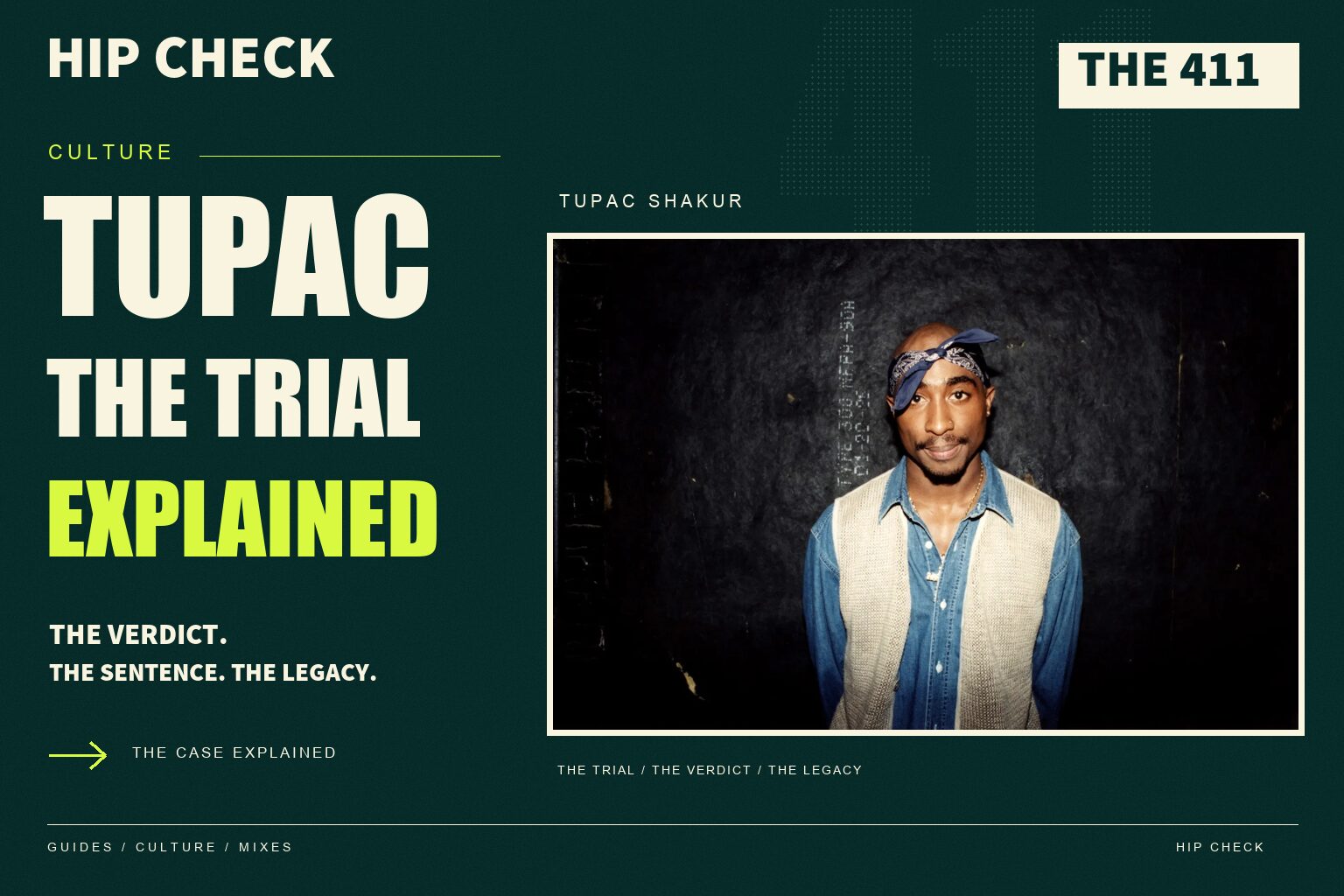
The Tupac Shakur murder trial reached a verdict in August 2026, followed by a sentence on 13 October: Duane “Keffe D” Davis received 40 years to life in prison. For listeners who have followed the case through decades of interviews, documentaries and speculation, those are significant developments. Understanding what the court decided means separating the verdict from the wider mythology around Tupac’s death.
This THE 411 guide covers the timeline, the prosecution and defence arguments, the sentence and where to watch further coverage. It also returns to the reason this story resonates far beyond an American courtroom: Tupac’s music.
Last researched: 20 October 2026. This article summarises published court reporting; it is not an independent review of the complete court file.
What happened in the Tupac murder trial?
A Las Vegas jury convicted Davis on 31 August 2026 of first-degree murder with use of a deadly weapon. The Associated Press reported that deliberations lasted less than three hours. Davis was prosecuted for his role in organising the attack, rather than as the person who fired the gun. Read the AP’s verdict report.
Judge Carli Kierny subsequently imposed the prison sentence. The Guardian’s 13 October report provides the starting point for this update.
The key dates
- 7 September 1996: Tupac was shot while travelling in a car near the Las Vegas Strip.
- 13 September 1996: he died from his injuries, aged 25.
- 2023: Davis was charged in connection with the killing.
- 31 August 2026: the jury returned a guilty verdict.
- 13 October 2026: Davis was sentenced to 40 years to life.
The shooting and death were six days apart. Keeping those dates separate matters when reading anniversary reports. ABC News’ sentencing coverage sets out that chronology alongside the family’s response.
Why was Davis prosecuted if he was not accused of firing the shots?
The prosecution’s case concerned participation in a planned retaliatory attack. According to the AP’s evidence explainer, prosecutors argued that Davis assembled the group, supplied the gun and helped carry out the shooting after Tupac and others assaulted Davis’s nephew, Orlando Anderson, at the MGM Grand.
That distinction is central to reading the verdict accurately. A conviction for involvement in a murder is not the same claim as a finding that the defendant personally pulled the trigger. Headlines that compress both into a single label can obscure what the prosecution actually argued.
Why did the case take so long?
According to Reuters’ report, published by KSL, authorities had long suspected Davis’s involvement but lacked sufficient evidence to charge him. His later public accounts, memoir and recorded conversations with investigators became central to the prosecution.
The long delay is part of what makes this case difficult to follow. An interview may have been recorded years before it appeared in a documentary, then resurfaced again as courtroom evidence. The date a clip is uploaded does not necessarily tell you when the statement was made.
What did the prosecution and defence argue?
The competing accounts are documented in Court TV’s daily trial coverage. Prosecutors relied heavily on Davis’s own descriptions of his involvement, together with testimony and other evidence. The defence challenged the reliability of those descriptions, arguing that public stories were financially motivated rather than trustworthy admissions.
The defence also questioned the lack of physical evidence placing Davis at the scene and raised issues concerning earlier agreements with investigators. Prosecutors disputed the extent of the protection those agreements provided. The jury ultimately returned a guilty verdict.
For readers watching the proceedings, distinguish three things: a lawyer’s argument, a witness’s testimony and a court’s finding. They play different roles. A dramatic statement in an opening argument is not, by itself, a fact independently established by the court.
What does “40 years to life” mean here?
Court TV’s sentencing report describes two consecutive terms: 20 years to life for murder, followed by 20 years to life for the deadly-weapon enhancement. Together, those produce the reported 40-years-to-life sentence.
It should not be described as a fixed 40-year release date. Nor should it be casually rewritten as “life without parole”. The AP’s sentencing coverage explains that parole eligibility would not arrive until Davis was at least 100 years old.
Davis said at sentencing that he intended to appeal, according to Court TV. An announced intention to appeal is not an overturned conviction. This article does not claim that an appeal has since been filed or decided.
The family’s perspective
ABC News reported emotional statements from members of the Shakur family describing the personal and generational loss. The hearing was about a brother and a son as well as an internationally recognised artist.
That perspective deserves space alongside the evidence. A verdict can settle a question of criminal responsibility without undoing the years a family has lost. Readers can hear the statements in the sentencing coverage or consult the published hearing transcript.
Watch and read: useful sources beyond the headlines
Start with courtroom coverage, then use reporting to understand the sequence. These links offer different levels of detail; older material should be read in light of the subsequent verdict and sentence.
- Court TV: closing arguments and verdict-day coverage — linked from the broadcaster’s 31 August trial updates. Useful for hearing how both sides presented their cases. It predates sentencing.
- Court TV: trial coverage, 24 August — a longer courtroom session that includes testimony concerning documentary interviews. Useful context for why recorded accounts mattered.
- ABC News: sentencing video, 13 October — a shorter route into the outcome for readers who do not want a full trial session.
- Sentencing transcript — a searchable reading companion. Check the original recording when exact wording matters.
- Snoop Dogg inducts Tupac into the Rock & Roll Hall of Fame — the Hall’s official 2017 video. This is a personal tribute and music-history perspective, not evidence about the murder.
Court coverage discusses violence and bereavement and may contain distressing testimony.
Why Tupac’s legacy belongs in this story
The Rock & Roll Hall of Fame’s Tupac profile traces an artist whose work moved between political anger, vulnerability and celebration. His 2017 induction recognised an influence that outlasted his short recording career.
For DJs, that range is worth revisiting in the records themselves. Listen to the contrast between “I Get Around”, “Dear Mama” and “California Love”: the change in emotional register matters as much as tempo or familiarity. They offer different ways into the same artist, whether you are preparing a set in the US, Europe or elsewhere.
Our view at Hip Check is that a responsible account of the trial should help readers understand the outcome while keeping the artist in view. The court story is significant. Tupac’s voice, writing and place in hip-hop deserve more attention than the rumours surrounding his death.
Explore more DJ guides and music culture in THE 411.