
The Roots of Hip Hop
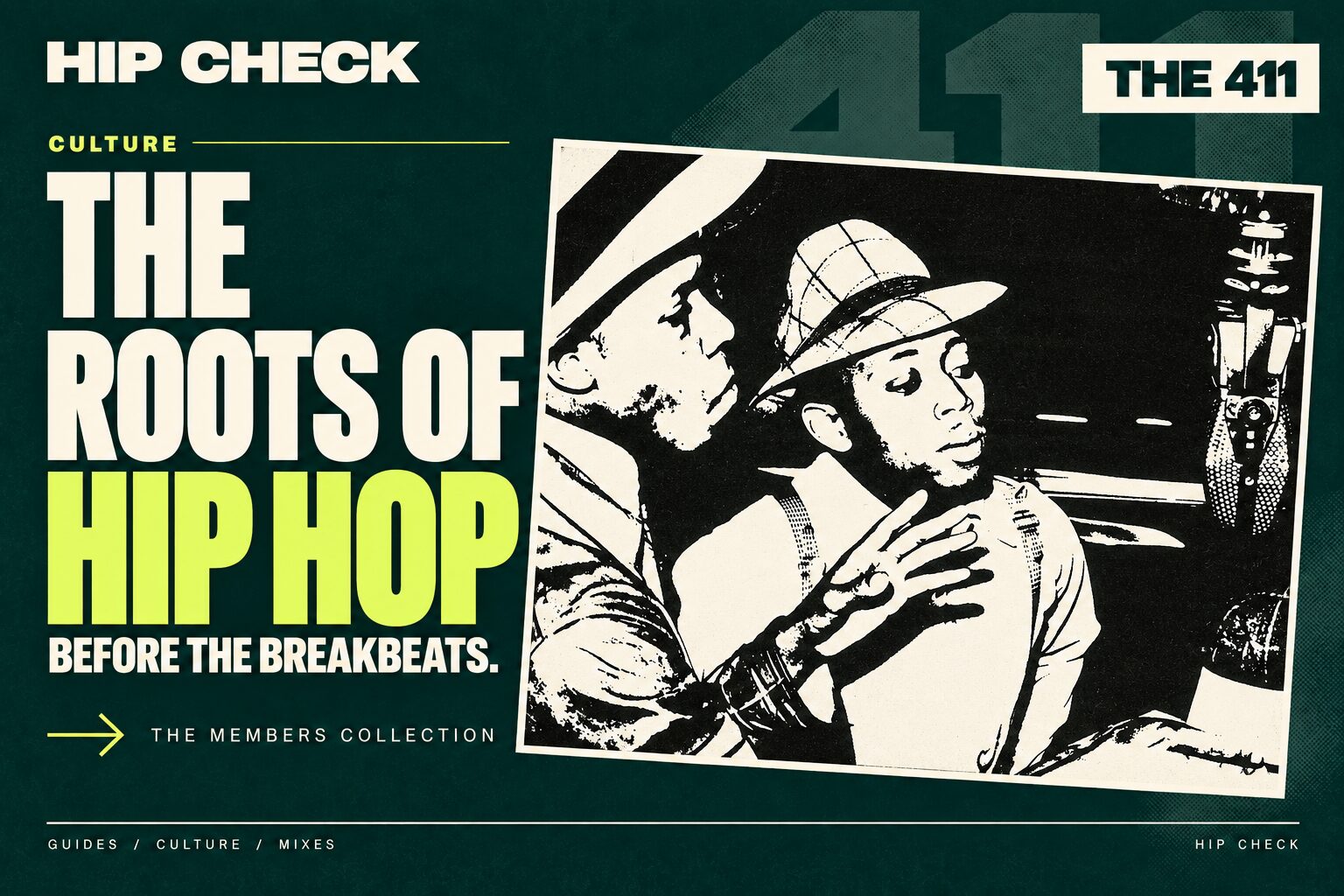
Before the turntable became an instrument, the voice was already working the rhythm. A boast, a punchline, a preacher drawing an answer from a congregation. Follow the roots of hip hop far enough and those sounds start to connect. For a DJ, that history opens a different route into the record collection.
EXCLUSIVE COLLECTION
Dig deeper. Get the complete 26-recording collection with a paid Hip Check membership.
Paid members only
Upgrade your membership to preview and download this collection.
Already a paid member? Log in.
The Roots of Hip Hop brings together 26 recordings for that deeper dig. The collection reaches into blues, gospel, jazz and early rhythm and blues, with Slim Gaillard, Richard Berry and The Soul Stirrers among the names inside. That is a small taste of the folder. Active paid Hip Check members can explore and download the complete collection through the EXCLUSIVE area below.
Where do the roots of hip hop begin?
Hip-hop culture took shape in the Bronx during the 1970s through DJs, MCs, dancers and the communities around them. The break became a focal point for dancers, and DJs extended those passages across records. That act of selection helped make the DJ central to the new culture. The Smithsonian’s account of early hip-hop explains how breakbeats and turntable technique developed together. Explore the Smithsonian’s hip-hop history.
The expressive traditions behind rap reach further back. Rhythmically delivered speech, verbal competition and storytelling were already part of African American life and performance. The Library of Congress traces rap’s connections to older poetry and song, while Smithsonian Folkways explores the continuing influence of spoken-word traditions. Listen with those connections in mind and the timing of a sentence can become as interesting as the drums beneath it. Library of Congress on hip-hop and rap · Smithsonian Folkways on African American spoken word.
Blues, gospel and the art of holding a room
A storyteller needs more than words. The pause before a punchline, the emphasis on a repeated phrase and the space left for a response all help an audience follow a performance. Those are useful things for an open-format DJ to notice. They can explain why a vocal entrance gets a reaction, or why letting a phrase finish can make a transition feel stronger.
Gospel offers another way to think about the relationship between a lead voice and a group. Call and response makes participation part of the performance. Blues brings its own vocabulary of character, humour and lived experience. Jazz and early R&B offer further opportunities to listen for rhythmic speech, swing and personality. Treat these as connections to explore while listening. A shared technique alone cannot establish that a particular recording directly influenced a later rapper.
Three ways DJs can dig into the collection
- Listen for the voice first. Pick a recording and follow where the performer places each phrase. Notice a pause, an answer or a change in emphasis. Try carrying that awareness into the way you cue vocal-led hip-hop and R&B.
- Build a listening sequence. Start with a voice or rhythmic idea that catches your attention, then find a later record in your own library that gives you a connection to discuss. This can become the basis of a radio feature, a listening session or a short history segment in a mix.
- Prepare for the room. Audition each recording before a gig. Check its language, level, tempo movement and the length of the passage you want to play. An older recording may suit a short introduction or a quieter listening moment. Choose the context after hearing the whole performance.
Make room for a deeper record collection
The appeal of a collection like this is the discovery. A familiar artist name can get you through the door, but the next unfamiliar voice may give you the idea you take into your next set. Set aside a listening session, make a few notes and follow the details that catch your ear.
Explore all 26 recordings with a paid Hip Check membership. The public preview gives you a starting point. Members get the full folder to investigate for themselves. If you want more history, unexpected voices and musical context in your DJ library, this is a collection to spend time with.
Paid members only
Upgrade your membership to preview and download this collection.
Already a paid member? Log in.