
The Diwali Riddim: The Beat Behind Get Busy and a Global Dancehall Takeover
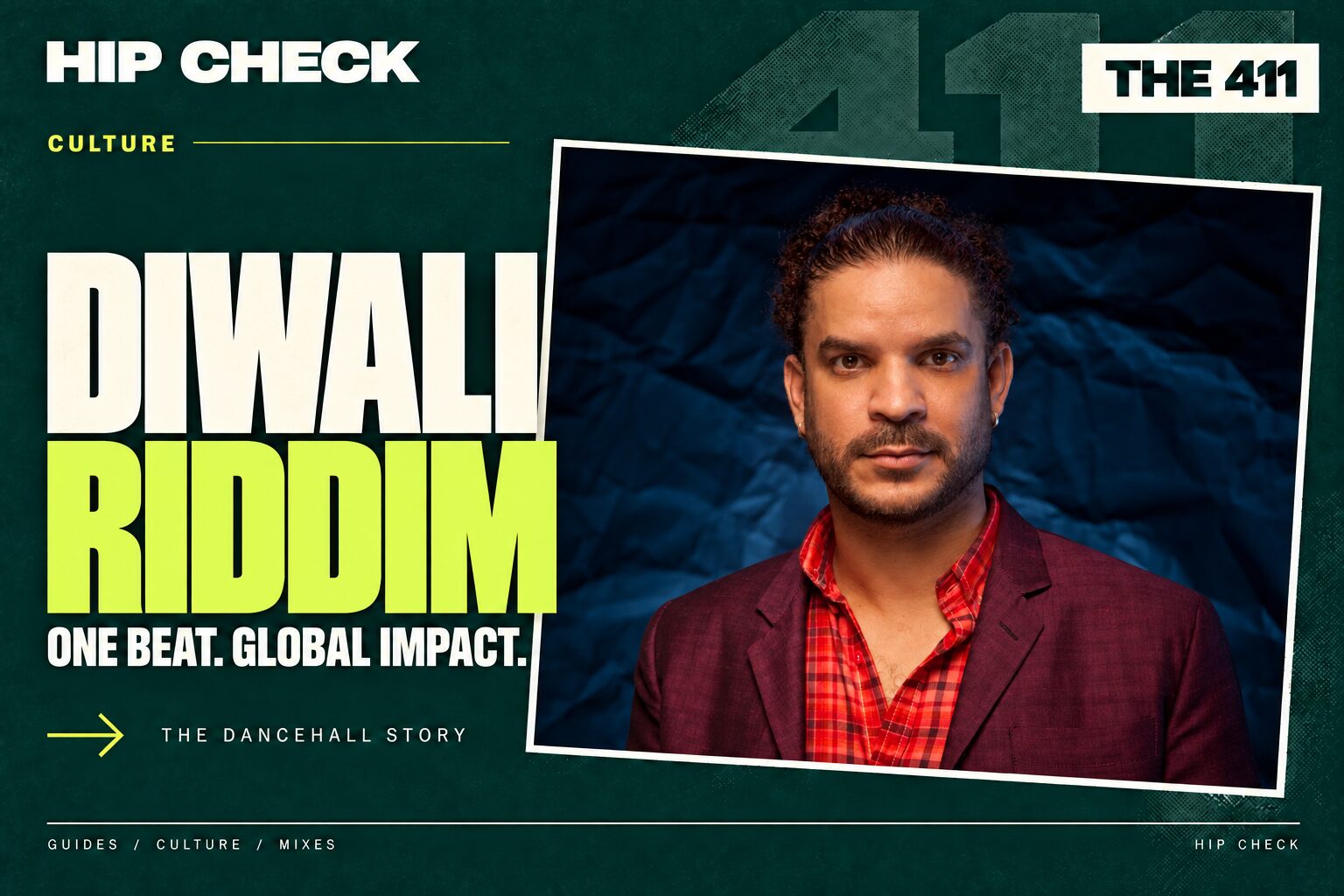
Sometimes the crowd recognises the rhythm before it recognises the song. Diwali is one of those records-within-records: the handclap-led dancehall riddim that links Sean Paul’s “Get Busy” and Wayne Wonder’s “No Letting Go”, with a wider family of crossover tracks around it.
For an open-format DJ, the interesting question is not just who made it. It is how to use that shared musical memory without playing the same idea into the ground. Here is the history, a listening route and an HC suggestion for turning the connection into a short set moment.
What is a riddim?
In this Jamaican music context, a riddim is a backing track or rhythmic foundation used for different vocal recordings. Think of it as a shared musical setting in which each artist brings a different melody, delivery or story. It is not simply another word for a remix of one singer’s record.
That changes how you hear the catalogue. Two records can feel closely connected because their musical foundation is related, even when the vocal character is completely different. For a selector, the identity of the rhythm can be as useful a connection as genre, tempo or artist.
Lenky’s beat, then the crossover
Steven “Lenky” Marsden is the producer behind Diwali. In a 2017 Jamaica Observer retrospective, he described deliberately trying to make something different. The paper dates the Greensleeves Diwali compilation to May 2002 and reports that Sean Paul recorded on the rhythm after other artists had already used it.
The distinction between creation and breakthrough matters. Red Bull Music Academy’s loop history traces an earlier creation date and explores the beat’s cross-cultural influences. The firmly useful marker for this listening guide is its emergence through the 2002 releases and subsequent international crossover, rather than treating every later hit as an original 2002 recording.
Its appeal is easy to understand when you listen: a recognisable clap pattern creates momentum while leaving room for the vocal. Our interpretation is that this balance helps explain its DJ usefulness. You can change the singer and emotional temperature without abandoning the rhythmic thread.
Three entry points into the sound
Wayne Wonder — No Letting Go
The melody gives this one a welcoming, singalong character. In an R&B-led room, we would try it as the invitation into a dancehall section rather than assuming the crowd wants the hardest transition immediately.
Listen to the official Wayne Wonder audio on YouTube. Its VP Records credits name Steven Lenky Marsden as producer. A Greensleeves Diwali release is also available on his official artist channel, showing the song’s place in the riddim catalogue.
DJ exercise: identify a complete vocal phrase, let the audience hear its resolution, then cue your next record. Do not rush a recognised chorus just because the next beat is easy to line up.
Sean Paul — Get Busy
For a more direct energy lift, this is the obvious next reference point. Sean Paul’s rhythmic delivery gives the shared foundation a different personality from Wayne Wonder’s singing. That contrast is the lesson: a connected rhythm does not require identical energy.
Watch the official “Get Busy/Like Glue” video. The upload contains both songs; do not mistake everything in the combined video for the Diwali backing. In a 2024 Associated Press interview, Sean Paul reflected on “Get Busy” reaching the US number one spot in 2003 and on the enduring dancefloor feeling he tries to create.
DJ exercise: practise a short phrase-aligned handover from “No Letting Go”. Compare it with a longer blend. Choose whichever makes the incoming vocal clearer on your versions, not whichever involves more technique.
Lumidee — Never Leave You (Uh Oooh, Uh Oooh)
This widens the story into an R&B/pop crossover. It belongs in the Diwali conversation, but do not label its backing as an identical Lenky production without checking the version and credits. The familiar release uses a modified take associated with DJ Tedsmooth and Trendsetta.
DancehallMag’s catalogue overview places it alongside “Get Busy” and “No Letting Go” in the riddim’s crossover story. Use it as an invitation to compare the arrangements, rather than assuming matching claps mean matching structures.
DJ exercise: audition the hook against your outgoing track before committing. Familiarity can make a short switch effective, but two recognisable sung hooks competing at once can flatten the moment.
Build a short Diwali sequence
Our proposed order: “No Letting Go” → “Get Busy” → “Never Leave You”. This is HC’s editorial suggestion, not a historical ranking or a guaranteed crowd response.
- Invite: give Wayne Wonder enough room to establish the melody.
- Lift: switch to Sean Paul at a clear phrase boundary. Let one lead vocal take over.
- Redirect: use Lumidee’s hook as a bridge towards your next R&B or hip-hop choice, if the room is responding.
Analyse and check the exact files in your DJ software. Set cues at the start of useful phrases and after the sections you want to keep. BPM readouts, intros and clean edits may vary. A shared riddim does not guarantee that the downbeats, key, arrangement or mastering of every version will line up.
Try a two-track version as well. If the second song has already made the point, move on. The purpose is a musical connection, not proving how many related records you own.
Where to go next
For a hip-hop or R&B exit, look for compatible energy and a clear vocal entrance. For a deeper dancehall section, choose the next rhythm because the crowd wants that direction. An Afrobeats crossover can work as an editorial choice, but these are distinct musical traditions: do not present any African record with a syncopated groove as a descendant of Diwali.
The same care applies geographically. A record’s international success does not mean every room in the US, Europe or elsewhere remembers it in the same way. Watch recognition, singing and movement rather than relying on a global-hit label.
What DJs can take from the story
Credit the rhythm as well as the front-person. Learn what connects the versions, then use their differences. Diwali shows how a recognisable musical foundation can support several memorable records; good sequencing lets the audience hear both the connection and the individuality.
For help keeping those handovers clean, read our guide to mixing vocals. Explore more DJ history in The Greatest Hip Hop DJs Ever?
Hero portrait supplied for this feature; original photograph credited to William Richards Photography.