
90’s R&B Slow Jams
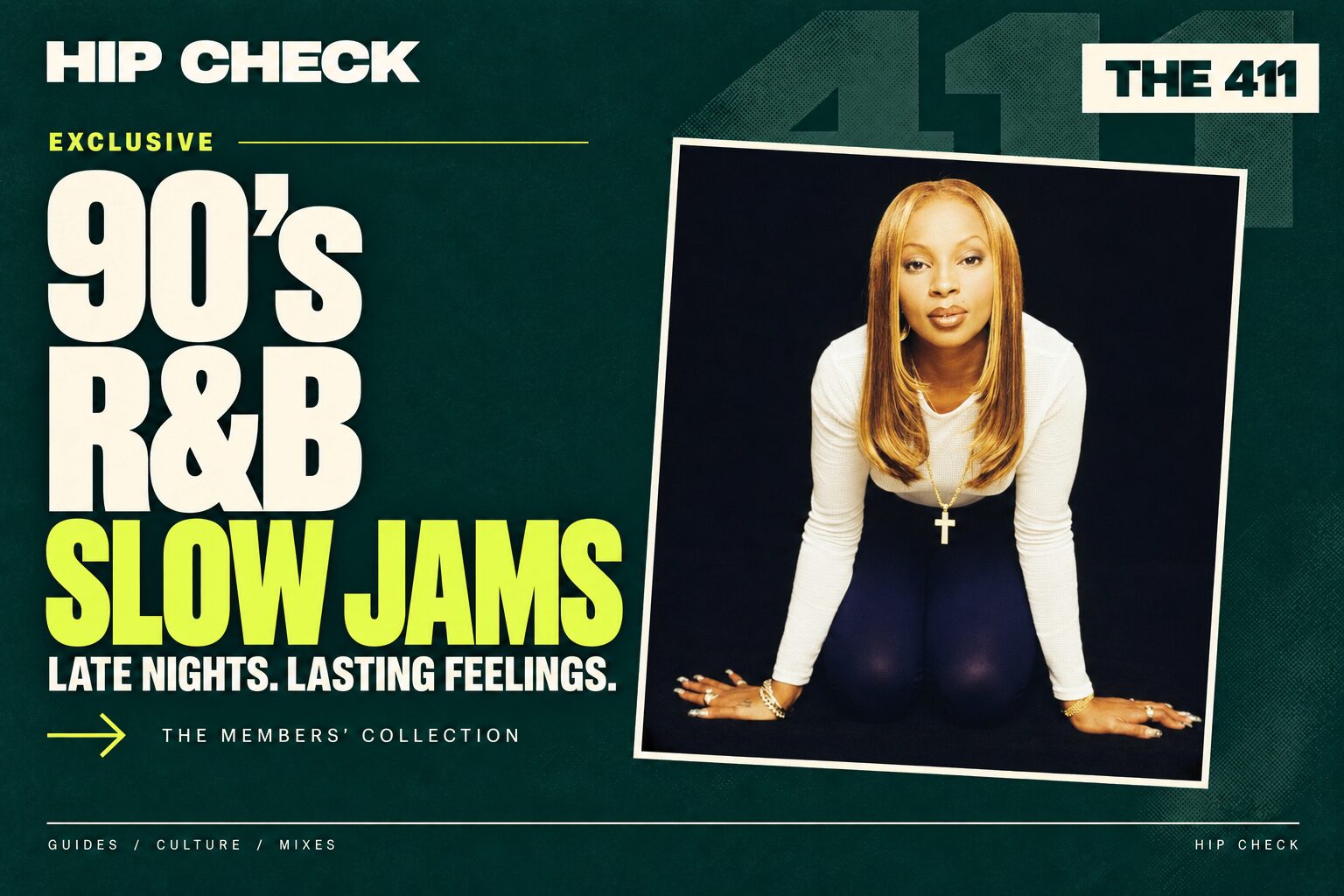
Sometimes the strongest move a DJ can make is to give a voice more room. The right slow jam can turn a busy night into a shared moment: people singing the next line, couples moving closer, a final chorus that stays with them after the lights come up. Hip Check’s 90’s R&B Slow Jams collection is an invitation to build that part of your library with care.
EXCLUSIVE COLLECTION
Make room for the slow jams. Explore the complete 30-file collection with a paid Hip Check membership.
Paid members only
Upgrade your membership to preview and download this collection.
Already a paid member? Log in.
Inside the 90’s R&B Slow Jams collection
Mary J. Blige, Boyz II Men and Jodeci give you a taste of the voices inside. The full folder contains 30 MP3 files, including an a cappella version, with ballads, soulful grooves and vocal-led selections to explore. It is centred on the 90s mood, with a neighbouring-era crossover, rather than a strict release-date archive.
Some selections invite a slow dance; others keep a stronger rhythmic pulse underneath the vocal. That range gives a DJ choices when planning a quieter segment. Paid members can open the folder and find the combination that suits their room. The public preview stops at a few names, leaving the rest of the discovery inside the collection.
The late-night tradition behind slow jams
Slow jams belong to a longer listening culture. Quiet storm began as a radio format, bringing mellow R&B and soul into a sustained atmosphere. PBS American Masters explains the quiet storm tradition and how records gain a different context when programmed alongside earlier and contemporary slow jams.
That is useful inspiration for a DJ. Think about the feeling that carries from one performance into the next: tenderness, longing, confidence or release. A sequence can hold attention through that emotional connection even when it is not building towards a faster beat. The skill is in making the change of mood feel deliberate.
The 90s also brought R&B singing into close conversation with hip-hop. The Rock & Roll Hall of Fame’s Mary J. Blige profile describes her fusion of gospel-inspired vocals and hip-hop attitude. That combination helps explain why a slower, emotionally direct record can still have weight and presence in an urban open-format set.
How to programme a slow-jam section
Choose the moment before the record
A late-night lounge set, a requested slow dance and the final minutes of a party need different decisions. Look for a reason to change pace: a couple’s request, a planned closing section or a room already responding to vocal-led music. If the audience wants the current energy to continue, keep the slow-jam selection ready for another moment.
Give the performance time to develop
Listen through the verse, chorus and any later lift while preparing. Decide which part makes the performance special and avoid mixing out just before it arrives. A slower record may need more time to tell its story than a quick party edit. You can still be selective about its length without reducing it to a recognisable opening.
Build a small emotional arc
Try three records in practice: one that eases the room into the mood, one that deepens it and one that offers a satisfying finish. Compare how their lyrics and arrangements relate. A romantic atmosphere does not mean every song tells a happy story, so check the words before choosing music for a wedding or a personal dedication.
Mix the vocals with care
Start by marking where each vocal enters and where the outgoing phrase resolves. Avoid laying a new lead vocal over a long held note or an important final line. A brief instrumental handover, a well-timed fade or a clean change after a musical ending can serve the songs beautifully. Rehearse the transition and listen back without watching the waveforms.
If you try a longer blend, compare harmony as well as tempo. Check your software’s analysis by ear and listen for changing arrangements. Keep the incoming level controlled so a fuller production does not overwhelm a quieter recording. The aim is a comfortable handover that keeps the listener with the performance.
The a cappella file offers another creative possibility, but it needs preparation. Check its timing and key against any accompaniment, and give the vocal space. You do not need to turn every selection into a routine; sometimes letting a performance play is the most effective choice.
Find the part of your library that slows the room down
The familiar names are only the starting point. Set aside time to hear the full selection, pick the voices that suit your audience and build a short sequence you trust. A well-chosen slow-jam section gives you another way to make a night memorable.
Active paid Hip Check members can explore and download the complete collection below. Join with a paid membership to discover all 30 files and start shaping your own late-night selection.
EXCLUSIVE COLLECTION
Make room for the slow jams. Explore the complete 30-file collection with a paid Hip Check membership.
Paid members only
Upgrade your membership to preview and download this collection.
Already a paid member? Log in.