
Funk & Hip Hop Classics
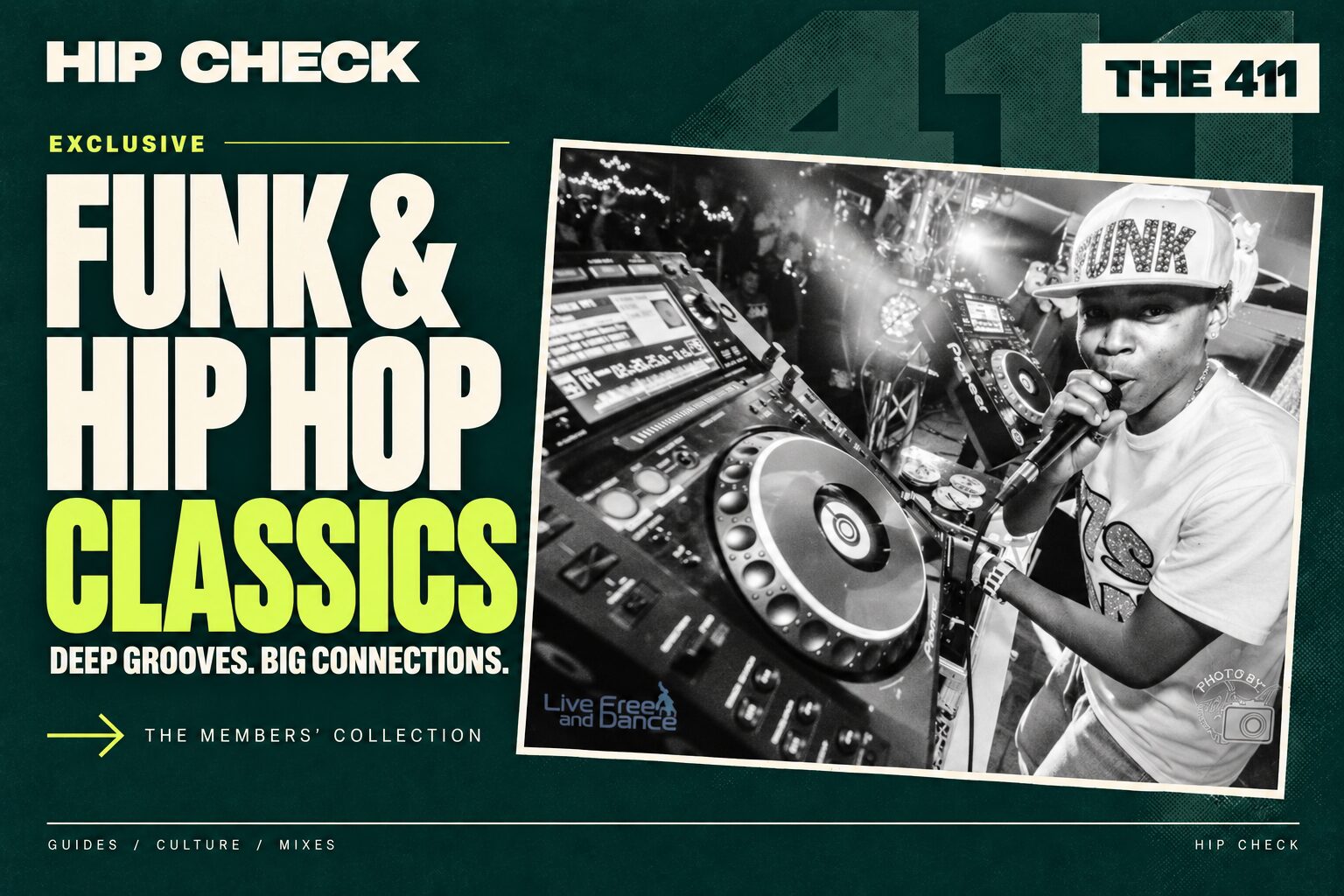
A bassline can do the work before the first vocal arrives. Funk and hip-hop classics give DJs a way to connect generations through rhythm: a loose drum pocket, a sharp horn phrase, a hook the room knows before it knows why. This Hip Check collection is built for digging into those connections and finding fresh routes through familiar territory.
EXCLUSIVE COLLECTION
Open up your next set. Explore all 68 files with a paid Hip Check membership.
Paid members only
Upgrade your membership to preview and download this collection.
Already a paid member? Log in.
Funk & Hip Hop Classics: what is inside?
The folder contains 68 MP3 files, spanning funk, soul, jazz-funk, disco and hip-hop. James Brown, Aretha Franklin and De La Soul are three of the names inside. The wider selection reaches across decades, giving you both foundational grooves and later records to explore alongside them.
There are alternate versions as well as different songs: the filenames include extended mixes, shorter edits, instrumentals and an acapella. That makes this a collection of 68 files, rather than a claim of 68 unique tracks. Paid members can open the complete folder, compare versions and decide which ones belong in their own sets. The public preview is deliberately just a taste.
Why funk belongs in a hip-hop DJ collection
Hip-hop’s relationship with funk runs deeper than a shared tempo. Early DJs found moments where the rhythm section took over, then extended those breaks for dancers. Selection and timing turned a short passage within a record into the centre of the party. The Smithsonian’s account of hip-hop and breakbeats explains that connection between funk records and the developing DJ culture.
James Brown is a key part of that story. Smithsonian Music describes his influence through the stripped-down, rhythm-led approach he developed with his band. For a working DJ, the useful question is what happens when you listen past the famous vocal. A clipped guitar part, a bass figure or a drum fill can suggest the next transition.
The practical lesson is still relevant on a controller or club setup. Know the passage that carries the energy, know where it changes, and decide how long the audience needs to hear it. Berklee’s report on a pioneering turntable demonstration shows how repeating a short musical phrase became a performance technique in its own right.
Three ways to use funk and hip-hop classics in your sets
Build a warm-up with movement
Try a bass-led selection before reaching for your biggest vocal records. Listen for how much space each arrangement leaves and whether the groove invites movement without demanding a peak-time reaction. A warm-up can have character and momentum while leaving the next DJ somewhere to go.
Connect records by feel
A similar BPM is a starting point. Compare swing, bass weight and vocal density too. When one record has a busy vocal, let the phrase finish before introducing the next. If a long blend makes two grooves fight, rehearse a shorter change at a clear musical boundary. The connection should make sense to the listener as well as to the beatgrid.
Choose the version that suits the moment
An extended version can give a groove time to settle. A shorter edit may suit a faster-moving open-format set. An instrumental can leave room for a transition, while an acapella needs careful preparation around phrasing and key. Check the actual files before planning the routine; a filename tells you the intended version, not how it will behave in your mix.
Prepare the groove before the gig
Live-played recordings can move around a fixed tempo. Listen through your intended blend, check the beatgrid against the drums and place cue points by ear. Compare levels between older recordings and later productions, and leave headroom rather than pushing the mixer harder to compensate. Audition lyrics and edits for the event you are playing.
Start with a small selection and build a ten-minute practice sequence. Give each record a role: opening groove, transition, vocal lift or change of direction. You will learn more from hearing those decisions together than from filling a playlist and hoping it works on the night.
Find your next connection
The three artists above are only the introduction. The full collection gives you more grooves, voices and versions to investigate, with room to find a combination that feels like your own. If your library needs more routes between funk, soul and hip-hop, make this your next listening session.
Active paid Hip Check members can access the folder below. Join with a paid membership to explore the complete selection and start building your own set from it.
EXCLUSIVE COLLECTION
Open up your next set. Explore all 68 files with a paid Hip Check membership.
Paid members only
Upgrade your membership to preview and download this collection.
Already a paid member? Log in.