
Wu-Tang Meets Tribe: A Four-Track DJ Set for November 9
There’s a lovely moment when the piano from “C.R.E.A.M.” comes out of the speakers on its own. Give it a little air and somebody will start the hook before the record gets there. That’s the turn we’d build a November 9 set around. Spend the first half with A Tribe Called Quest, then let a few piano notes take the room from Queens to Staten Island.
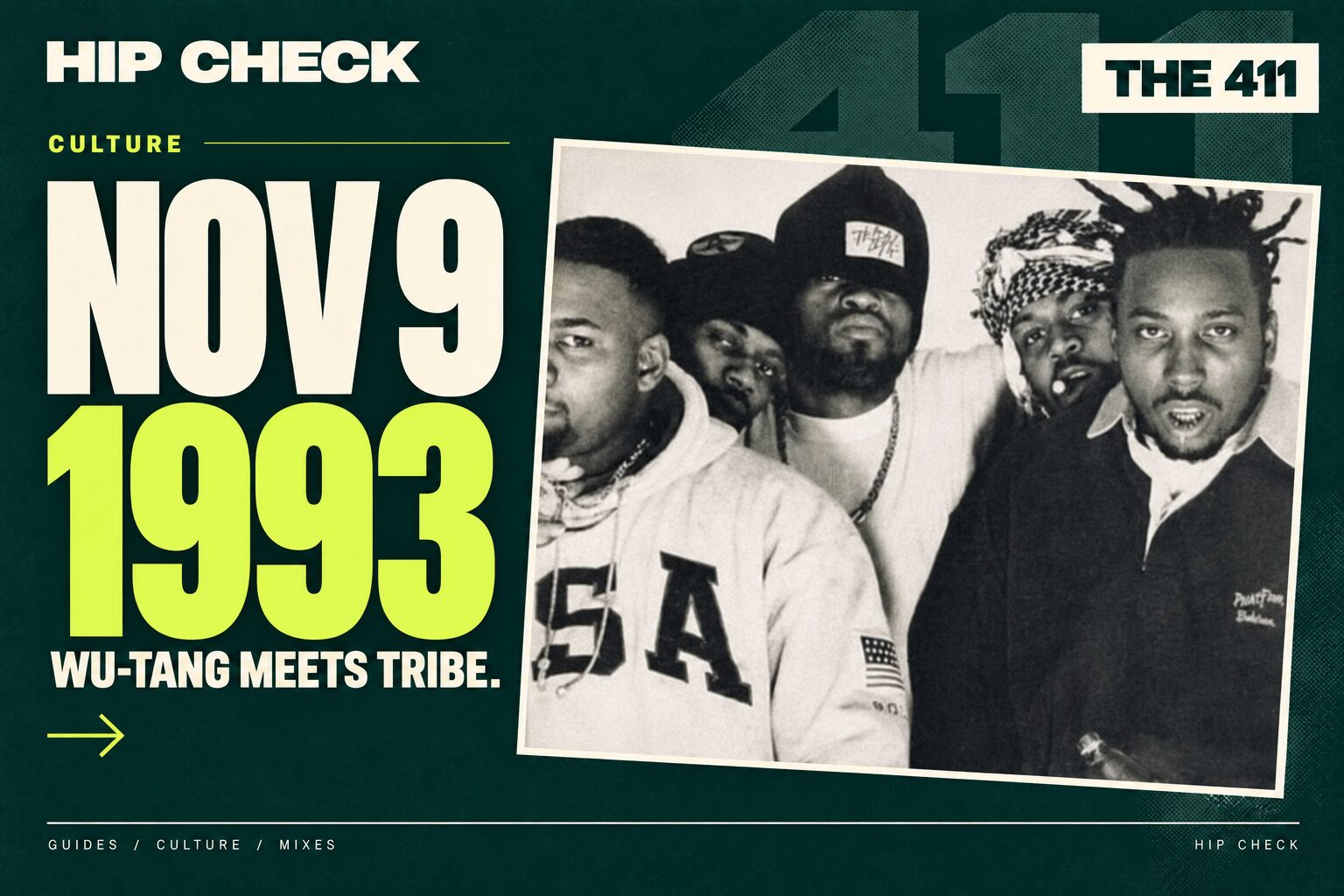
On November 9, 1993, Tribe released their third album, Midnight Marauders, on the same day Wu-Tang Clan released their debut, Enter the Wu-Tang (36 Chambers). November 9, 2026 marked 33 years since you could walk into a record shop and take both home. Here’s our four-record running order for playing that double bill. Listen to Midnight Marauders · Wu-Tang’s official release timeline.
1. A Tribe Called Quest — Electric Relaxation
Open on the bass figure. Its little turn at the end is half the pleasure, so leave the filter alone and let the groove settle. Q-Tip and Phife’s back-and-forth gives people a way into the set even if they only recognise one voice. Count the drum bars under the sample during prep. The point where the bass figure feels like it has come home can pull your ear away from the downbeat.
The handover: Pick a completed vocal line, count the remaining beats and bring “Award Tour” in on the next one. Rehearse it with both bass lines audible once in headphones. You’ll hear why a short handover works.
2. A Tribe Called Quest — Award Tour
Here’s the lift. The bright keyboard figure carries straight across a busy room, and the refrain gives the crowd a part of its own. Let them have a full pass at it. That keyboard melody draws on Weldon Irvine’s “We Gettin’ Down”, a lovely record to pull up afterwards if you want to hear how much character a few notes can carry. Read theGrio’s guide to the samples on both albums.
The handover: Mark the end of the refrain on your copy. Close Tribe’s channel there and start the piano on “C.R.E.A.M.” at its own tempo. A long blend gives those two melodic loops time to fight. A cut lets the crowd recognise each one.
3. Wu-Tang Clan — C.R.E.A.M.
Resist the urge to jump straight to the singalong. Raekwon’s opening verse earns the hook, and the space between piano notes is a big part of why his voice holds the room. If you’ve got time, stay for Inspectah Deck. This is the stretch of the set where a DJ can step back from the mixer.
The handover: On the hook you choose to leave, keep the final response clear. Cue “Protect Ya Neck” at the drum entry if the floor is moving. If people are listening closely, use the spoken opening on the album version and let the change of scene play out.
4. Wu-Tang Clan — Protect Ya Neck
Finish with the record that makes passing the mic sound like a competitive sport. Follow the changes of voice. A rewind on a familiar entrance can work if the room calls for it, but cutting every verse short costs you the contrast that makes this record hit. For a shorter slot, take one complete verse and cut on the phrase boundary before the next MC starts.
Before the gig: Check the exact intro on each file and audition the lyrics in the versions you plan to play, especially for daytime or radio sets. Mark your four entry points on those copies. If you use the mic, one sentence will do: “Two albums, one release day. New York, November ninth, 1993.” Then give the downbeat back to the records. Read TIDAL’s account of the shared release day.